Nebulae look like painted clouds, but their colors are not decoration. They are light produced, reflected, filtered, and blocked by matter in space. A single image can contain glowing...
A meteor lasts only seconds, but its flash connects planetary debris, orbital mechanics, atmosphere, and the oldest human habit of looking up. Most meteors begin as tiny fragments moving...
Astrophotography is strange: the camera is pointed at the present, but almost everything recorded happened in the past. Light needs time to travel, so every frame is built from...
Antares burns with the color of a star nearing the end of one chapter of its life—a reminder that red in the sky can be both beautiful and temporary....
Dust is easy to mistake for obstruction. In astronomy, it is often the thing that gives the universe its shape. Dark lanes carve glowing nebulae into recognizable forms, reflection...
The night looks empty only because our eyes are impatient. Darkness is not the absence of the universe; it is the condition that allows the faintest parts of it...
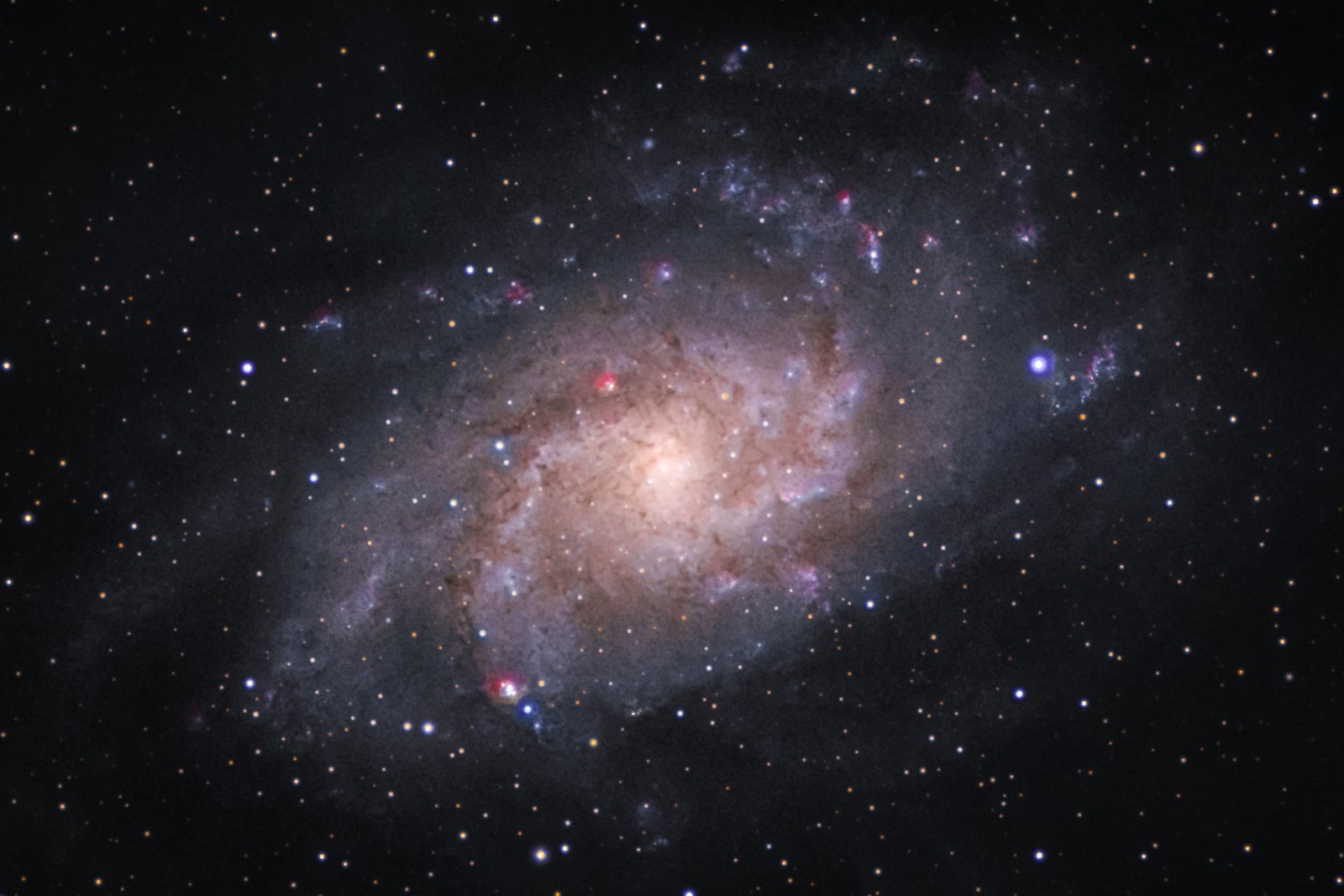
M33 is the quiet third giant of the Local Group: a nearby spiral galaxy whose loose arms are crowded with some of the most impressive star-forming regions in our...
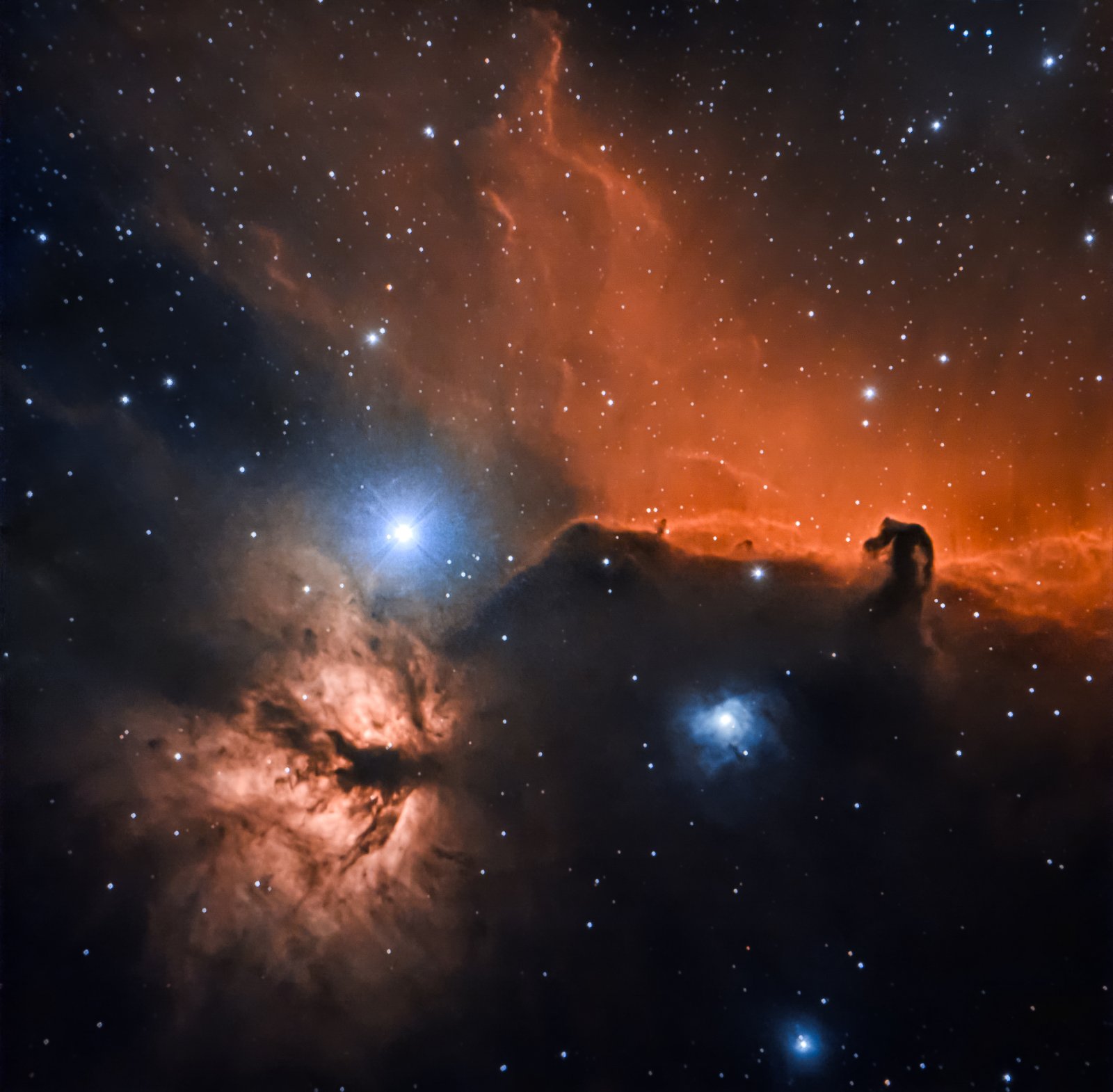
The Horsehead and Flame Nebulae share one of Orion’s most iconic fields: a dark silhouette beside a bright stellar nursery, both sculpted by nearby massive stars. The Horsehead is...
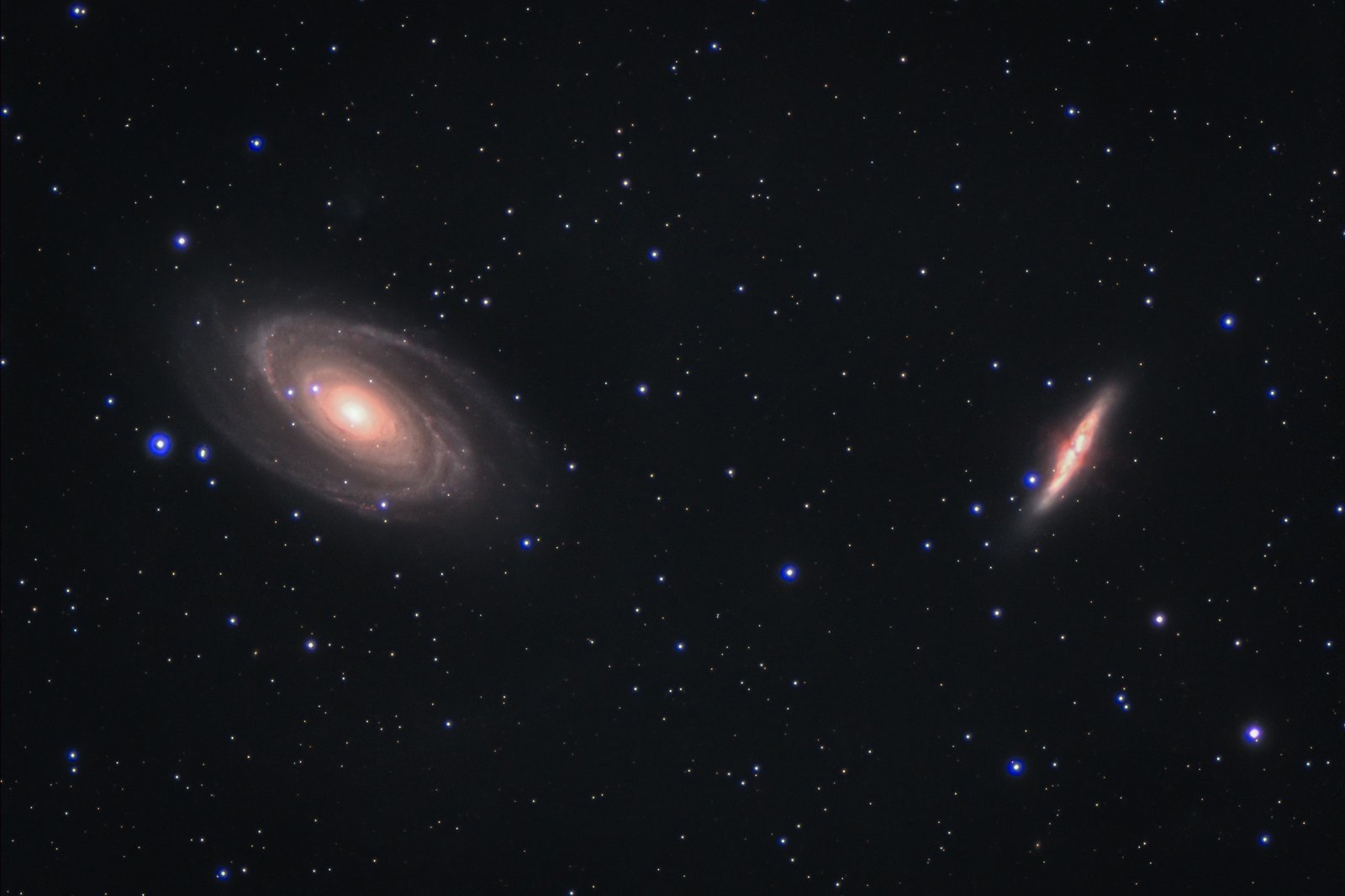
M81 and M82 are a nearby interacting pair in Ursa Major: a graceful spiral beside a turbulent starburst galaxy transformed by gravity. They fit comfortably in the same telescopic...