
The Nights That Give You Nothing
Not every night under the stars produces a photograph. Some of the most useful sessions end with bad guiding, clouds, dew, wind, or an empty hard drive.
Astrophotography has a cruel sense of humor. You can spend hours planning a night, charge every battery, clean every surface, check the forecast, choose the target, drive into darkness, polar align, focus, guide, frame—and then watch a cloud arrive precisely where the telescope is pointed.
Or the wind rises. Or the dew wins. Or a cable snags. Or guiding becomes inexplicably terrible. Or the first good exposure begins three hours later than planned.
There are nights when the universe seems perfectly willing to exist, just not for your camera.
Failure is part of the instrument
A deep-sky image is the final visible product of a long chain. Optics, mount, tracking, guiding, focus, power, software, weather, calibration, processing, and patience all have to cooperate. When any link breaks, the stars reveal it immediately.
That can be maddening, but it is also how the system teaches you.
A bad night makes weaknesses obvious. A loose connection becomes a lesson in cable management. Dew becomes a lesson in thermal control. Wind becomes a lesson in balance, shelter, and realistic focal length. Bad focus becomes a lesson in checking instead of assuming.
The ruined frames are not useless if they make the next night better.
Nothing is still experience
There is pressure in astrophotography to turn every clear night into data. Integration time becomes a kind of currency. Three hours is better than one. Ten is better than three. Fifteen becomes a project. The numbers start to feel like proof that the night counted.
But the sky does not owe us productivity.
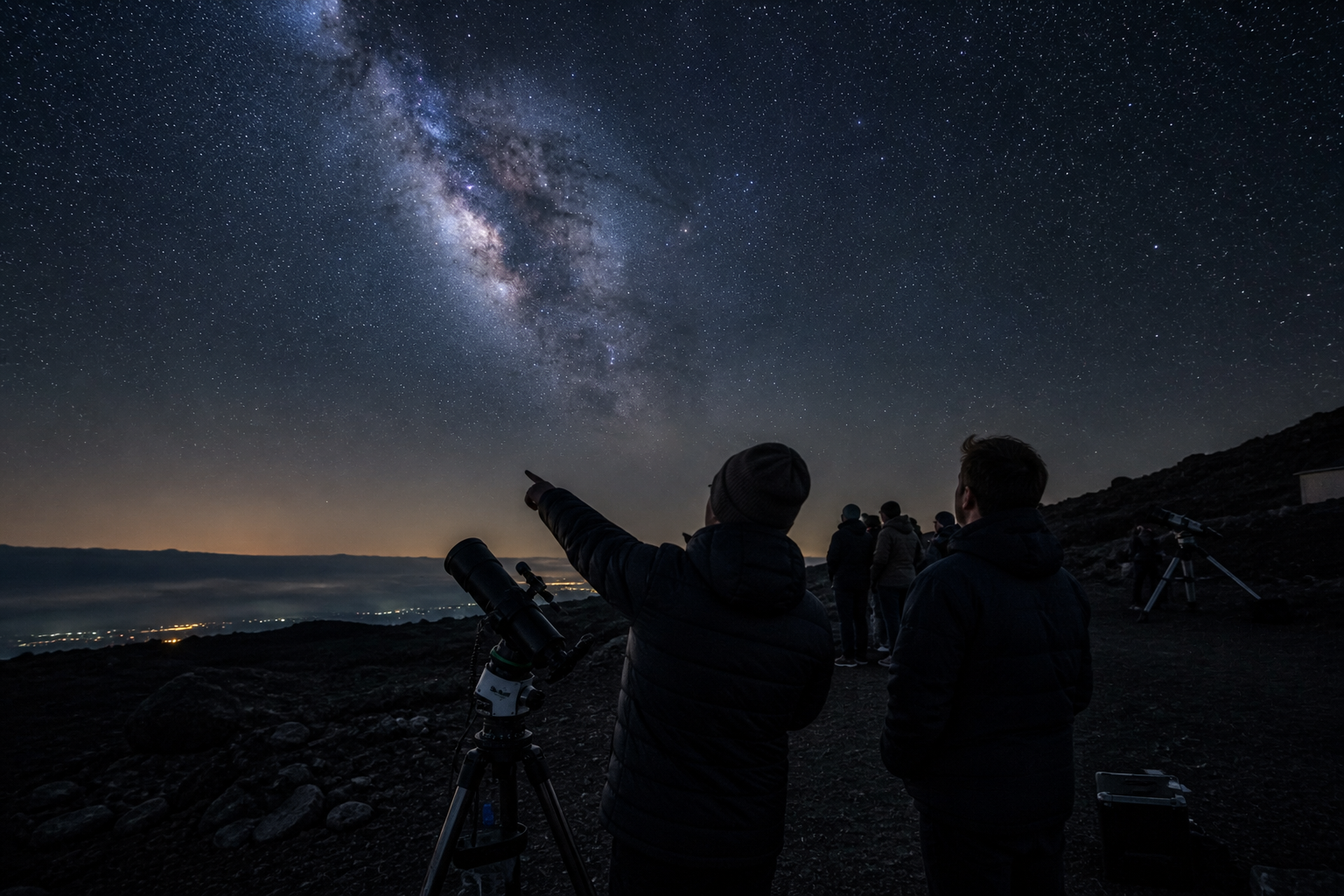
A night can end with no keeper frames and still contain useful things: the sudden brightness of the Milky Way after your eyes adapt, the sound of wind changing direction, a planet rising while the computer throws an error, the absurdity of troubleshooting electronics beneath stars whose light began traveling before the electronics existed.
The best images hide the bad nights
A finished astrophotograph is clean. It does not show the rejected subs, the autofocus failures, the clouds crossing half the sequence, the cables, the cold hands, or the hour spent wondering why the mount suddenly forgot how to behave.
That invisibility can make good images look inevitable.
They are not.
Every polished frame is partly a record of all the nights that taught the photographer what not to do.
Sometimes the sky gives you photons. Sometimes it gives you a problem. Both can become part of the image eventually.