
The Moon Is Not Dead
The Moon looks still from a distance, but its surface is a record of violence, volcanism, sunlight, and time.
The Moon is often described as a dead world. Geologically, compared with Earth, that is mostly fair. There are no oceans moving across its surface, no weather systems rebuilding the landscape, no forests, rivers, or plate tectonics constantly erasing the past.
But dead is not the same as empty.
The Moon is one of the most densely written landscapes we can see from Earth. Its craters overlap older craters. Lava plains flood ancient basins. Mountain chains ring impacts so large that the mind struggles to imagine the violence required to make them. Every bright ray and dark mare is part of a history that survived precisely because so little has happened to erase it.
A landscape that remembers
Earth is restless. Wind, rain, oceans, glaciers, volcanism, erosion, and biology continuously rewrite its surface. On the Moon, the absence of atmosphere and liquid water allows ancient scars to remain visible for immense spans of time.
That is why looking at the Moon through a telescope can feel less like observing a neighbor and more like reading a fossil.
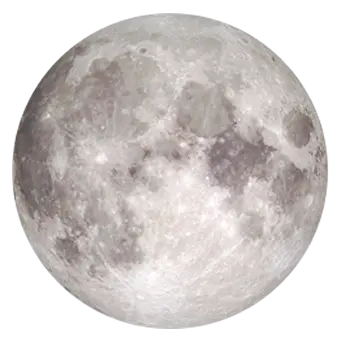
The large dark regions called maria are ancient basaltic plains. They formed when huge impacts excavated basins and later volcanic eruptions filled parts of those depressions with dark lava. The brighter highlands preserve an even older, more heavily cratered crust.
The terminator changes everything
A full Moon is brilliant, but it is not always the most revealing phase. The most dramatic lunar observing often happens near the terminator—the boundary between lunar day and night.
There, sunlight arrives at a low angle. Crater rims throw long shadows. Mountain peaks catch the first light while their surroundings remain dark. Valleys become obvious. Relief that disappears under overhead sunlight suddenly becomes three-dimensional.
Nothing on the surface has changed. Only the angle of light has changed, and with it, our understanding of the terrain.
Astronomy does this constantly. The universe is full of things that become visible only when illumination, wavelength, contrast, or perspective changes.
The Moon is still changing
The Moon is not frozen in an absolute sense. Micrometeorites continue to strike its surface. Larger impacts still occur. The constant bombardment of tiny particles slowly churns the upper layer of lunar soil into regolith. The temperature swings violently between day and night. Tidal interactions with Earth continue, and the Moon very gradually recedes from us.
Its evolution is quiet compared with Earth, but it has not stopped.
Familiar enough to ignore
Perhaps the strangest thing about the Moon is how easily familiarity makes it invisible. It is bright enough to cast shadows, large enough to show surface detail without equipment, and responsible for ocean tides that reshape coastlines. Yet because it returns night after night, it can become background.
A telescope fixes that quickly.
At high magnification the Moon stops being a symbol and becomes a place. Craters have walls. Mountains have shape. Shadows move from hour to hour. The surface feels close enough to touch and impossibly far away at the same time.
The Moon is not dead. It is quiet. And quiet worlds can carry some of the longest memories.