
Astrophotography101
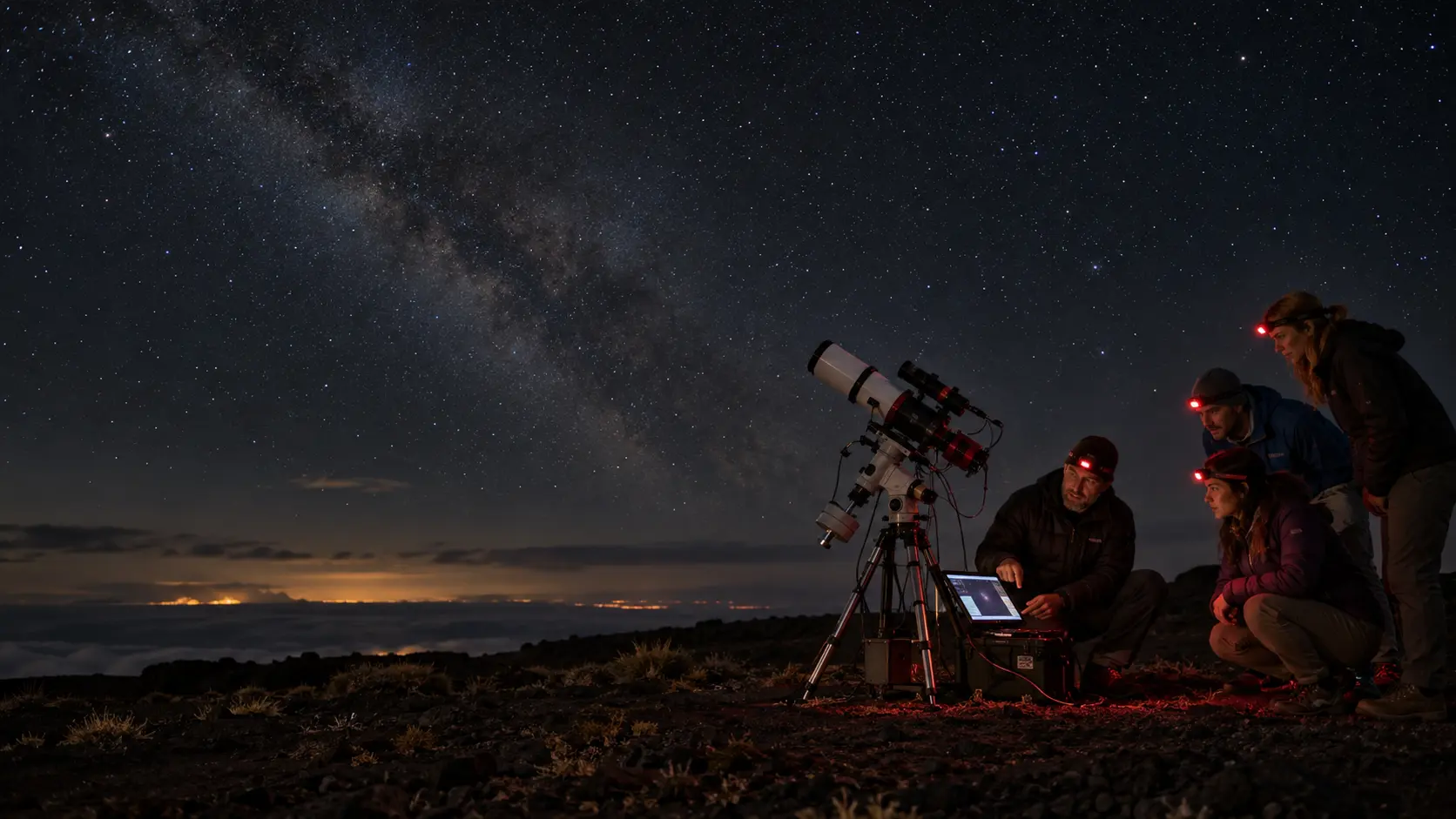
A dark sky is only the beginning. The real magic happens when you learn how to collect its light. Astrophotography 101 is a four-hour, hands-on field course built for people who want to move beyond snapshots and understand how a real deep-sky image is made.
We begin with a bare imaging rig and build the night from the ground up: polar alignment, tracking, focus, framing, exposure, guiding, stacking, and the first careful stretch that pulls a hidden nebula or galaxy out of darkness. You will work beside active astrophotographers using the same practical workflow we use beneath Hawaiʻi’s night sky.
No previous astrophotography experience is required. Bring your own camera or tracker if you have one, or learn on our equipment.
The goal is not to memorize a pile of settings. It is to understand the decisions behind a successful imaging run, so you can repeat the process with your own equipment.
Build an image from starlight.
A four-hour, small-group field course covering the complete deep-sky workflow—from setting up and aligning the rig to capturing, stacking, and stretching real astronomical data. Beginner-friendly and limited to ten guests.
- 4 guided hours
- Max 10 guests
- No experience required
- Bring-your-own gear optional
- Session images included
Mountain nights are cold. Dress warmly and bring any camera gear you would like help understanding. You do not need to own a telescope, tracker, or astronomy camera to attend.
Guests drive themselves to the observing site. We choose one of four mountain meeting locations based on weather and viewing conditions. Your confirmation email will include the final location, arrival time, directions, and any last-minute updates.